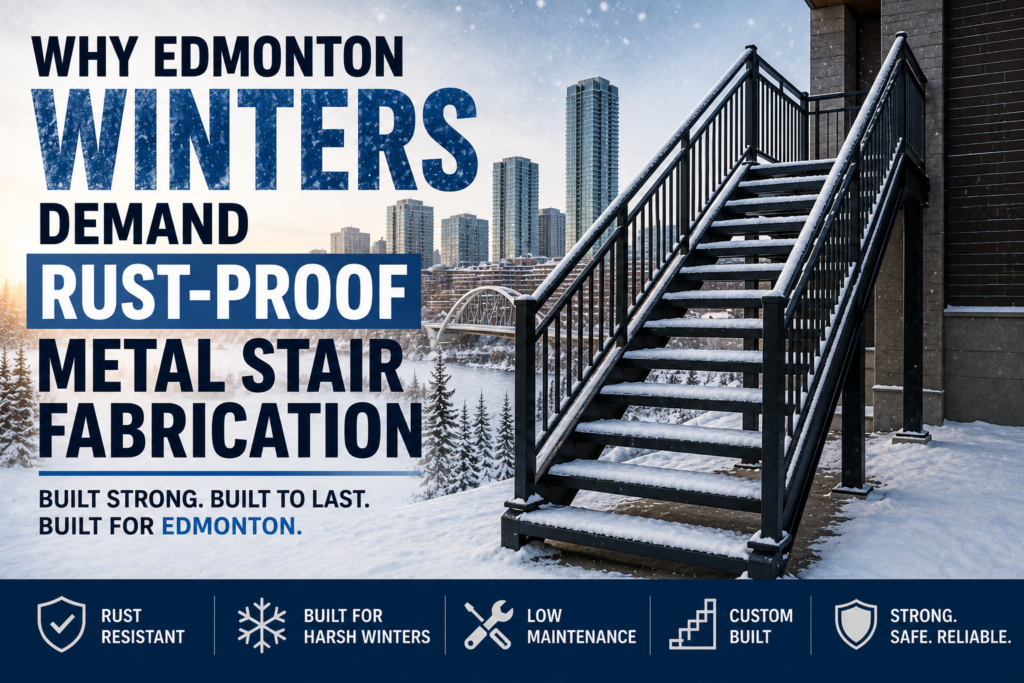
Edmonton is no stranger to extreme weather. With temperatures routinely dropping below -20°C, months of heavy snowfall, and repeated freeze-thaw cycles that crack and corrode almost everything in their path, the city’s winters put outdoor structures through serious punishment. Metal staircases—exposed to the elements year-round—take some of the hardest hits.
For homeowners, property managers, and business owners, this raises an important question: are your stairs built to last? Choosing the right materials and investing in quality Metal Stair Fabrication in Edmonton isn’t just about aesthetics. It’s about safety, structural integrity, and avoiding the kind of costly repairs that come from cutting corners at the start.
Understanding Edmonton’s Harsh Winter Conditions
Edmonton’s climate creates a perfect storm for metal corrosion. Heavy snowfall piles up on stair surfaces, trapping moisture against the metal for weeks at a time. When temperatures fluctuate—dropping overnight and rising during the day—that moisture expands and contracts inside existing micro-cracks, widening them with each cycle.
Then there’s the salt problem. Road salt and de-icing chemicals are essential for public safety, but they’re highly corrosive. When tracked onto metal stairs or splashed up from roads and driveways, these chemicals strip away protective coatings and accelerate oxidation dramatically. Add persistent wind-driven moisture from winter storms, and it becomes clear why untreated steel deteriorates so quickly here.
The result? Stairs that look fine in October can show significant surface rust, weakened joints, and structural compromise by spring. And the longer corrosion is left unchecked, the more expensive the fix becomes.
How Rust Affects Metal Stair Systems
Rust doesn’t just look bad—it actively compromises the safety and function of a staircase. Here’s how:
- Structural weakening: Oxidation eats into the metal’s core, reducing load-bearing capacity over time.
- Loose joints and fasteners: Corroded bolts and welds lose their grip, creating instability underfoot.
- Slip hazards: Rust creates uneven, flaking surfaces that reduce traction, especially dangerous on icy winter mornings.
- Reduced lifespan: Stairs that could last decades with the right materials may need full replacement within 10 years if corrosion is left untreated.
- Poor curb appeal: Rusty staircases make a bad first impression on clients, tenants, and visitors.
The critical mistake many property owners make is waiting until rust becomes visible before acting. By that point, surface corrosion has often already penetrated deep enough that spot repairs aren’t sufficient—full replacement becomes the only option.
Why Rust-Proof Metal Stair Fabrication Matters
Investing in rust-resistant fabrication from the outset pays off in multiple ways. Corrosion-resistant stairs maintain their structural integrity longer, require less frequent maintenance, and deliver a better return on investment over their lifetime.
The benefits extend across property types:
- Residential homes: Families need stairs they can rely on daily, regardless of weather conditions.
- Apartment buildings: Property managers can’t afford recurring repair costs or liability from unsafe common areas.
- Commercial properties: First impressions matter, and deteriorating stairs signal neglect.
- Industrial facilities: Heavy-use environments demand maximum structural reliability.
Rust-proof fabrication isn’t a premium luxury—it’s a practical necessity for any outdoor staircase in Edmonton’s climate.
Best Rust-Resistant Materials for Edmonton Stair Fabrication
Powder-Coated Aluminum
Aluminum is naturally corrosion-resistant, which gives it a head start over traditional steel. It’s lightweight, easy to work with, and requires very little maintenance over its lifetime. When finished with a durable powder coat, aluminum exterior stair systems stand up exceptionally well to Edmonton’s freeze-thaw cycles and chemical exposure.
Galvanized Steel
Galvanized steel is coated with a layer of zinc, which acts as a sacrificial barrier against corrosion. When the zinc oxidizes, it protects the underlying steel rather than allowing rust to form. This makes it a solid choice for heavy-duty industrial applications where strength is the top priority.
Stainless Steel
For premium projects where both appearance and durability are non-negotiable, stainless steel is hard to beat. Its chromium content forms a passive oxide layer that resists corrosion exceptionally well. The tradeoff is cost—stainless steel comes at a higher price point—but for high-end commercial builds, the long service life justifies the investment.
| Material | Rust Resistance | Maintenance | Best For |
| Powder-Coated Aluminum | Excellent | Very Low | Residential & Commercial |
| Galvanized Steel | Very Good | Moderate | Industrial |
| Stainless Steel | Excellent | Low | High-End Commercial |
Protective Finishes That Extend Stair Life
Even the best base materials benefit from protective finishing. In Edmonton’s climate, the right finish can add years to the life of a metal staircase.
Powder coating bonds a durable polymer layer directly to the metal surface, sealing it against moisture, salt, and UV exposure. Many modern aluminum railing systems use powder-coated finishes specifically engineered for corrosion resistance in harsh climates—and for good reason. Galvanizing provides a similar function for steel, using zinc to shield the base metal. Protective sealants and weather-resistant paints offer additional layers of protection, particularly useful for existing structures showing early signs of wear.
One often-overlooked finish is anti-slip coating on stair treads. Beyond corrosion protection, these surfaces reduce the risk of falls during Edmonton’s icy winters—a safety consideration that’s just as important as structural integrity.
Key Features of High-Quality Metal Stair Fabrication in Edmonton
Quality fabrication goes well beyond choosing the right material. The best stair systems are engineered with performance and safety in mind from the ground up:
- Precision welding ensures joints hold under heavy loads and temperature stress.
- Proper drainage design prevents water pooling, which accelerates corrosion.
- Code-compliant fabrication meets Alberta’s building standards for load capacity, railing height, and tread dimensions.
- Non-slip stair treads maintain traction through wet and icy conditions.
- Weather-resistant fasteners prevent the hidden corrosion that can cause sudden structural failure.
- Custom sizing ensures stairs fit precisely, eliminating gaps where moisture collects.
Professional installation ties it all together. Even the best-fabricated stair system can underperform if it’s not installed correctly.
Why Aluminum Is Becoming the Preferred Choice
Across Edmonton’s residential and commercial sectors, aluminum is increasingly the material of choice for outdoor staircases. Unlike traditional steel, aluminum won’t rust—full stop. Its natural oxide layer reforms when scratched, providing ongoing protection without intervention.
Aluminum is also lightweight without sacrificing strength, making it easier to install and place less stress on supporting structures. Combined with a powder-coated finish, it offers a clean, modern aesthetic that holds up visually over years of harsh weather exposure. For companies like Omega Aluminum Railing Systems that specialize in customized aluminum fabrication and durable powder-coated systems, this material checks every box: corrosion resistance, low maintenance, and long-term value.
Maintenance Tips for Rust-Proof Metal Stairs
Even rust-proof stairs benefit from regular care. A few simple habits can significantly extend their service life:
- Remove snow promptly to reduce prolonged moisture contact.
- Wash away road salt after major storms, particularly near driveways and parking areas.
- Inspect annually for chips, cracks, or areas where the protective finish has worn away.
- Repair damaged coatings quickly—small touch-ups prevent larger corrosion problems.
- Tighten loose hardware at the start and end of each winter season.
- Schedule professional inspections every few years to catch structural issues early.
Consistent maintenance is far cheaper than emergency repairs or full replacement.
Why Professional Fabrication Makes a Difference
There’s a meaningful gap between a staircase that’s been assembled and one that’s been professionally engineered. Experienced fabricators who know Edmonton’s climate understand how to account for thermal expansion, drainage, and the specific corrosive pressures that local winters bring.
Professional fabrication means custom measurements that eliminate installation gaps, proper engineering that meets load and safety requirements, and high-quality welding that doesn’t fail under stress. It also typically comes with longer warranties and the assurance that the work meets Alberta’s building codes—something that matters when selling a property or passing a safety inspection.
Choosing a fabricator familiar with Edmonton’s conditions isn’t just about getting the job done. It’s about getting it done in a way that holds up for decades.
Don’t Let Edmonton Winters Win
Edmonton winters are relentless, and outdoor metal structures bear the brunt of that reality. Rust-proof materials—aluminum, galvanized steel, stainless steel—combined with professional finishing and expert installation, provide the protection needed to keep stairs safe, functional, and structurally sound through years of extreme weather.
The cost of quality Metal Stair Fabrication in Edmonton is modest compared to the cost of replacing a deteriorated staircase or, worse, dealing with a safety incident. For any property owner in the region, it’s one of the smartest long-term investments you can make.
Frequently Asked Questions
Ans: – Edmonton’s winters expose outdoor metal structures to heavy snowfall, road salt, ice, and repeated freeze-thaw cycles—all of which accelerate corrosion. Rust-proof fabrication prevents structural weakening, reduces maintenance costs, and keeps stairs safe year-round.
Ans: – Powder-coated aluminum is widely considered the best all-around choice for Edmonton’s climate. It’s naturally corrosion-resistant, lightweight, low-maintenance, and holds up well against salt and moisture. Galvanized steel suits heavy-duty industrial use, while stainless steel is ideal for premium commercial projects.
Ans: – With proper materials and professional fabrication, rust-proof metal stairs can last 30 years or more. Longevity depends on the material chosen, the quality of the protective finish, and how consistently the stairs are maintained.
Ans: – Yes, significantly. The zinc coating on galvanized steel acts as a sacrificial barrier that corrodes in place of the base metal, dramatically slowing rust formation. Regular untreated steel will show surface rust within a few Edmonton winters without ongoing protective treatment.
Ans: – A professional inspection every two to three years is recommended, along with a basic visual check at the start and end of each winter season. Any chips in the coating, loose fasteners, or signs of surface rust should be addressed promptly to prevent more serious damage.