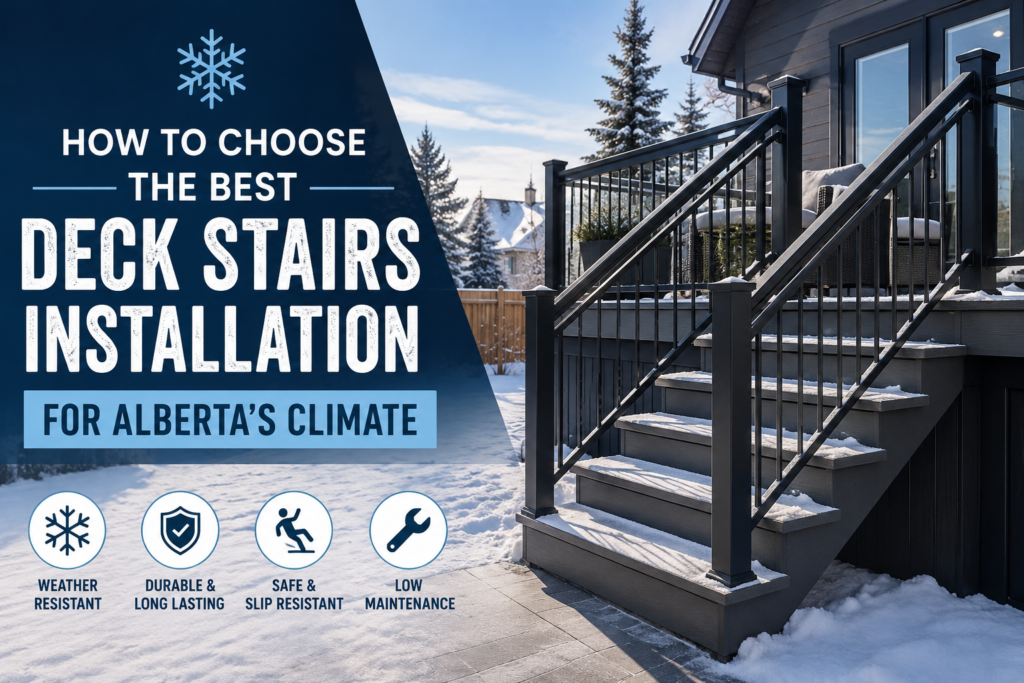
Alberta homeowners know that winter doesn’t ease up gently. Temperatures can plunge below -30°C, snow accumulates fast, and freeze-thaw cycles quietly wreak havoc on outdoor structures throughout the season. Deck stairs take the brunt of this punishment year after year—and when they’re not built for it, the consequences range from costly repairs to serious safety hazards. Choosing the right materials, design, and professional Deck Stairs Installation in Edmonton can make the difference between stairs that last decades and ones that deteriorate within a few years.
Why Alberta’s Climate Demands Durable Deck Stair Construction
Few provinces test outdoor structures as relentlessly as Alberta. Here’s what your deck stairs are up against:
- Extreme winter temperatures that cause wood to contract, fasteners to loosen, and materials to become brittle
- Heavy snow accumulation that adds significant weight load and traps moisture against surfaces
- Freeze-thaw cycles that force water into small cracks, which then expand and cause progressive cracking and structural movement
- Ice buildup that creates slip hazards and accelerates surface deterioration
- Strong UV exposure during summer that fades finishes, dries out wood, and weakens certain composite materials over time
Stairs built without these realities in mind won’t just look worn—they’ll become genuinely dangerous. Climate-specific construction directly increases both the longevity and the safety of your deck stairs.
Factors to Consider Before Installing Deck Stairs
Choose Weather-Resistant Materials
Not all materials perform equally when temperatures swing dramatically. The most reliable options for Alberta’s climate include:
- Aluminum: Rust-resistant, lightweight, and requiring virtually no maintenance, aluminum is increasingly the preferred choice for Edmonton homeowners. It won’t rot, warp, or corrode—even after years of exposure to snow and ice.
- Pressure-treated wood: Affordable and widely available, but requires regular sealing and is more vulnerable to moisture damage over time.
- Composite decking: Engineered to resist moisture, fading, and rot, composite materials offer a middle ground between wood aesthetics and low-maintenance performance.
- Galvanized fasteners and stainless steel hardware: Often overlooked, the hardware holding your stairs together matters just as much as the stair material itself. Low-quality fasteners rust and fail, creating structural instability.
Prioritize Slip Resistance
Icy stairs are one of the leading causes of winter injuries. When planning your installation, look for:
- Anti-slip stair treads with textured or grooved surfaces that maintain grip even when wet or icy
- Snow-friendly designs that don’t trap snow and ice in hard-to-clear areas
- Adequate drainage built directly into the tread design to channel water away before it freezes
Ensure Proper Drainage
Standing water is the enemy of any outdoor staircase. When water pools on stair surfaces or around footings, it accelerates material deterioration and dramatically increases ice formation. Proper drainage design—including angled treads and clear runoff pathways—reduces maintenance demands and significantly extends the lifespan of your stairs.
Build Below the Frost Line
Alberta’s frost depth can reach over a meter in many areas. When stair footings aren’t anchored below the frost line, frost heave pushes them upward as the ground freezes and contracts throughout winter. The result? Stairs that shift, crack, and pull away from the deck structure. Professional installation ensures footings are set at the correct depth for Edmonton’s specific soil and climate conditions—something that’s difficult to get right without local experience.
Best Materials for Deck Stairs in Alberta
Aluminum Deck Stairs
Aluminum has become a top choice for Alberta homeowners for good reason. It’s corrosion-resistant by nature, and when finished with a high-quality powder coat, it holds up beautifully against snow, rain, and freeze-thaw cycles. Maintenance is minimal—no sealing, no staining, no rotting. The lifespan of a well-installed aluminum staircase far exceeds that of wood, making it a smart long-term investment.
Composite Deck Stairs
Composite materials offer excellent moisture resistance and won’t fade under Alberta’s intense summer sun. They’re comfortable underfoot, require little upkeep, and provide a natural wood-like appearance without the associated maintenance demands. While they carry a higher upfront cost than wood, composite stairs typically pay for themselves through reduced repair and maintenance expenses.
Pressure-Treated Wood
Wood remains the most budget-friendly option, and when properly maintained, it can hold up reasonably well in Alberta. However, it requires annual or biannual sealing to prevent moisture damage, regular inspections for rot and fastener loosening, and eventual replacement sooner than aluminum or composite alternatives.
| Material | Durability | Maintenance | Winter Performance | Cost |
| Aluminum | Excellent | Very Low | Excellent | $ |
| Composite | Excellent | Low | Very Good | $$ |
| Wood | Moderate | High | Moderate | $ |
Important Design Features for Alberta Deck Stairs
Wider Stair Treads
Wider treads make snow removal far easier and provide more stable footing when surfaces are slippery. This single design choice can have an outsized impact on both safety and convenience during winter months.
Comfortable Rise Height
A consistent, comfortable rise height improves safety under any conditions—but it’s especially important when ice or snow is present. Stairs with an overly steep rise increase the risk of slipping and make accessibility more difficult for older adults.
Proper Handrails and Guardrails
Code-compliant handrails and guardrails are non-negotiable for safe stair use in winter. They should provide a firm, reliable grip even with gloves on, and must be installed at the correct height and spacing to meet Alberta’s building codes.
Adequate Lighting
Darkness arrives early in an Alberta winter. LED stair lighting and motion sensor lights dramatically improve nighttime visibility and reduce the risk of missteps on icy stairs. These additions are relatively inexpensive and make a meaningful difference in day-to-day safety.
Why Professional Deck Stairs Installation in Edmonton Matters
DIY stair installation might seem straightforward—until you factor in precise measurements, structural anchoring, frost-line footings, drainage planning, and local building code compliance. Errors in any of these areas can compromise the structural integrity of your stairs and lead to costly repairs or safety incidents down the line.
Professional Deck Stairs Installation in Edmonton ensures that every element is executed the first time correctly. Experienced installers understand local building codes, know exactly how deep footings need to be set, and can identify drainage issues before they become structural problems. Many professional installations also come with warranty protection that DIY projects simply can’t offer.
Common Mistakes Homeowners Should Avoid
Even well-intentioned homeowners can make decisions that shorten the life of their stairs. Watch out for:
- Choosing materials based solely on upfront cost, without accounting for long-term maintenance expenses
- Ignoring drainage, allowing water to pool and ice to form regularly
- Attempting DIY installation without structural or code knowledge
- Using low-quality fasteners that rust and fail over time
- Skipping seasonal maintenance, particularly before and after winter
- Not obtaining required permits or inspections
- Failing to plan for snow accumulation load when sizing and anchoring stairs
Seasonal Maintenance Tips for Deck Stairs
Spring: Inspect all fasteners for rust or loosening, and clear away any debris or organic material that accumulated over winter.
Summer: Wash stair surfaces thoroughly and check finishes for fading, peeling, or wear that may need touch-ups.
Fall: Remove leaves promptly—they trap moisture and accelerate surface deterioration. Prepare stairs for the coming freeze by checking drainage pathways.
Winter: Clear snow regularly using a plastic shovel to avoid scratching surfaces. Use a stair-safe ice melt product that won’t damage metal or composite finishes, and avoid metal shovels on powder-coated surfaces.
Why Aluminum Deck Stairs Are an Excellent Choice for Edmonton Homes
Corrosion resistance alone makes aluminum a standout—but the benefits go further. Powder-coated aluminum finishes hold their appearance for years without fading or chipping, and the material handles Alberta’s demanding weather conditions without warping or degrading. Whether for a residential backyard deck or a commercial property entrance, aluminum stairs deliver a modern appearance with minimal upkeep and a long service life that outlasts wood by a significant margin.
Why Choose Omega Aluminum Railing System for Deck Stairs Installation in Edmonton?
Omega Aluminum Railing System brings over 20 years of experience to residential and commercial deck stair projects across Edmonton. Their premium aluminum railing systems feature patented railing technology and high-quality powder-coated finishes engineered to withstand Alberta’s most demanding seasons. Every project is customized to fit the homeowner’s specific needs, and professional installation ensures structural integrity, proper drainage, and full compliance with local building codes. Products are backed by a manufacturer’s limited warranty, giving homeowners confidence in both the materials and the workmanship long after installation is complete.
Build Stairs That Stand Up to Every Alberta Season
Alberta’s climate doesn’t offer much forgiveness for subpar outdoor construction. Choosing the right materials—particularly weather-resistant options like aluminum or composite—combined with smart design features and expert installation, gives your deck stairs the best possible chance of remaining safe and attractive for decades. Working with an experienced team for your Deck Stairs Installation in Edmonton means you don’t have to guess at frost lines, drainage requirements, or code compliance. You get a finished product that performs exactly as it should, winter after winter.
Frequently Asked Questions
Ans: – Aluminum is widely considered the best material for Alberta’s climate due to its corrosion resistance, minimal maintenance requirements, and excellent performance through freeze-thaw cycles. Composite decking is another strong option for homeowners seeking a wood-like appearance with low upkeep.
Ans: – Aluminum deck stairs, when professionally installed and finished with a quality powder coat, can last 30 years or more with very little maintenance. This significantly outlasts pressure-treated wood, which typically requires more frequent repairs and replacement.
Ans: – Yes. Regularly clearing snow using a plastic shovel, applying stair-safe ice melt, and avoiding harsh metal tools on coated surfaces will protect your stairs throughout winter and reduce the risk of surface damage or ice-related deterioration.
Ans: – Professional installation ensures footings are set below the frost line, drainage is correctly planned, structural anchoring is secure, and local building codes are met. These factors are critical to long-term safety and durability in Edmonton’s climate.
Ans: – Yes. Aluminum performs exceptionally well in extreme cold. Unlike wood, it doesn’t contract, crack, or absorb moisture, and it remains structurally stable through Alberta’s most severe winter temperatures.