
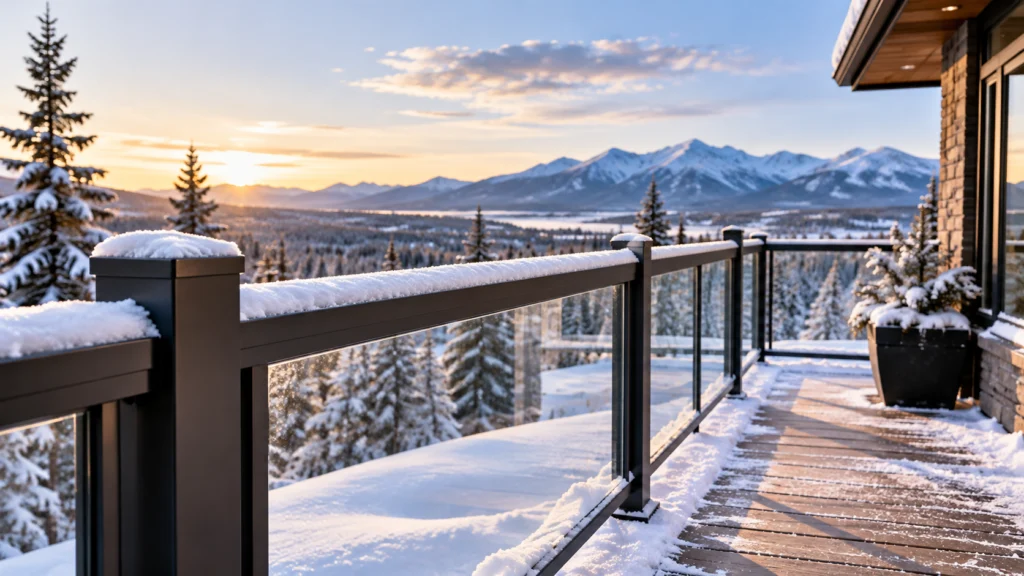
Alberta winters don’t go easy on anything left outdoors, and railings are no exception. Between sub-zero temperatures, heavy snowfall, stubborn ice buildup, and the freeze-thaw cycles that repeat throughout the season, exterior railings on decks, balconies, porches, and staircases take a real beating. That’s why seasonal inspection matters, even for materials built to withstand the elements.
Aluminum railings are a popular choice for Alberta properties precisely because they resist corrosion and require relatively little upkeep compared to wood or steel. But “low-maintenance” doesn’t mean “no maintenance.” A bit of regular cleaning and inspection goes a long way toward preserving both the appearance and the structural reliability of your railing system.
This guide walks through practical, Alberta-specific tips for aluminum railing maintenance so your railings stay safe, functional, and good-looking all winter long.
Why Winter Maintenance Matters for Aluminum Railings
Even though aluminum doesn’t rust the way steel or iron does, winter weather can still affect the overall performance and appearance of your railing system. Snow, ice, road salt, and temperature swings all interact with railings in ways that are worth understanding before the cold sets in.
Snow and Ice Accumulation
Heavy snow and ice tend to collect around railing posts, joints, and glass panels, especially after a storm or during periods of freezing rain. Left unaddressed, this buildup can add unnecessary weight and stress to connection points. Clearing it is important, but it needs to be done carefully to avoid scratching or chipping the railing’s finish.
Road Salt and De-Icing Chemicals
Salt residue and certain de-icing products can stain or damage powder-coated finishes, and they may also affect nearby metal components like fasteners or brackets. The safest approach is to rinse off salt deposits with water when possible and use only cleaning products approved for your specific railing system.
Temperature Changes and Structural Movement
Alberta’s freeze-thaw cycles can cause fasteners, mounting points, and adjacent building materials to expand and contract. If you notice looseness or movement in your railing, it doesn’t necessarily mean the railing itself has failed. It’s often worth checking the surrounding structure first before assuming the aluminum is at fault.
7 Essential Tips for Aluminum Railing Maintenance in Alberta
Here’s a practical checklist to help you keep your railings in good shape all winter.
1. Clean Your Railings Before Winter Arrives
Before the first snowfall, wash your railings with mild soap, lukewarm water, and a soft cloth or sponge. This removes dust, dirt, pollen, and other residue that could otherwise interact with snow and ice later in the season. Rinse thoroughly and let the surfaces dry whenever weather conditions allow.
2. Remove Snow Carefully
When it’s time to clear snow, reach for a soft-bristled brush or a plastic snow-removal tool rather than a metal shovel or sharp scraper. Avoid using excessive force, which can scratch the finish, and never strike ice directly against railing posts or glass panels to break it loose.
3. Inspect Posts, Fasteners, and Mounting Points
Periodically check for loose screws, brackets, anchor points, or any unusual movement. Pay close attention to shifting at deck edges, stair connections, and balcony attachments. If you notice instability or signs of structural damage, it’s worth arranging a professional inspection rather than guessing at the cause.
4. Rinse Away Salt and Chemical Residue
Whenever temperatures allow for safe cleaning, rinse off salt deposits before they accumulate over the season. Letting residue sit for months increases the risk of staining or finish damage. Always follow the manufacturer’s instructions for cleaning frequency and recommended products.
5. Protect the Powder-Coated Finish
Skip abrasive pads, harsh acids, strong alkaline cleaners, and unapproved solvents, all of which can wear down a powder-coated finish over time. If you’re considering paint or touch-up coatings, check the manufacturer’s recommendations first. Regularly inspect for scratches, chips, or peeling, and address any issues according to the product guidelines.
6. Check Glass Panels and Rail Connections
If your railing system includes glass panels, inspect them for visible cracks, chips, or signs of movement. Look closely for damaged gaskets, loose clamps, or gaps around connections. Keep glass surfaces clean with a suitable glass cleaner, following the system manufacturer’s guidance.
7. Perform a Spring Inspection
Once winter has passed, give your railing a thorough once-over. Check for accumulated dirt, finish damage, and any loose components, and clean away remaining residue. It’s also a good idea to examine surrounding deck boards, concrete, or mounting surfaces. Any safety-related issues should be assessed before the space sees regular use again.
What Should You Avoid When Maintaining Aluminum Railings in Winter?
A few common mistakes can shorten the lifespan of an otherwise durable railing system:
- Using metal tools to chip away ice
- Applying rock salt or chemical de-icers directly to railings without manufacturer approval
- Pressure-washing at excessive pressure or too close to joints and coatings
- Ignoring loose posts, cracked glass, or damaged mounting points
- Using abrasive cleaners that may scratch the powder-coated finish
Generally speaking, gentle cleaning and timely inspections do more for your railing’s longevity than aggressive winter cleaning ever will.
How Often Should You Maintain Aluminum Railings in Alberta?
A simple seasonal schedule helps keep maintenance manageable:
| Frequency | Recommended Task |
| Before winter | Clean railings and inspect the full system |
| During winter | Remove snow carefully and check for salt residue or visible damage |
| After major storms | Check for unusual movement or impact damage |
| In spring | Conduct a thorough cleaning and post-winter inspection |
| Annually | Arrange a professional inspection if needed, particularly for older or heavily used systems |
The exact schedule depends on your property’s exposure, usage, local conditions, and the manufacturer’s recommendations, so treat this as a starting point rather than a strict rulebook.
Are Aluminum Railings a Good Choice for Alberta Winters?
Aluminum’s natural corrosion resistance, paired with a quality powder-coated finish, makes it a strong option for Alberta’s harsh climate. Compared to materials that need frequent painting, staining, or rust prevention, aluminum railings generally ask less of homeowners and property managers over the long run.
That said, proper installation, compatible fasteners, and suitable mounting surfaces all play a role in how well a railing system performs over time. Aluminum is low-maintenance, not maintenance-free, and the environment it’s installed in still matters. Omega’s website highlights its powder-coated aluminum railing systems, residential and commercial applications, and low-maintenance design, which reflects this balance between durability and routine care.
About Omega Aluminum Railing System
Omega Aluminum Railing System provides aluminum and glass railing solutions for residential and commercial properties. Based in Edmonton, Alberta, the company offers railing styles designed to complement different architectural preferences and project requirements. Its offerings include powder-coated aluminum railing systems, glass panel options, and customized solutions. With an emphasis on durable materials, innovative design, and professional service, Omega helps property owners find railing options suited to their spaces. Whether you’re planning a new deck, balcony, or staircase, explore the available options and contact the team to discuss your project.
Keep Your Aluminum Railings Ready for Every Season
Regular cleaning, careful snow removal, and seasonal inspections go a long way toward maintaining the appearance and safety of outdoor railing systems through Alberta’s winter conditions. A little attention now means fewer surprises come spring.
Planning a new railing installation or need help choosing a durable system for your property? Contact Omega Aluminum Railing System to discuss aluminum and glass railing options for your residential or commercial project.
FAQs
No. Aluminum naturally resists rust and corrosion, which is one of the main reasons it holds up well in Alberta’s winter conditions. A quality powder-coated finish adds an extra layer of protection against moisture and salt exposure.
Use mild soap, lukewarm water, and a soft cloth or sponge to clean railings when temperatures allow. Avoid abrasive pads or harsh chemical cleaners, and rinse away any salt residue promptly to protect the finish.
Snow and ice themselves don’t typically damage aluminum, but how they’re removed matters. Using metal shovels or striking ice directly against the railing can scratch or chip the finish, so gentler removal tools are recommended.
It’s best to avoid applying rock salt or chemical de-icers directly to railings unless approved by the manufacturer. Salt residue can stain or damage powder-coated finishes over time, so rinsing with water is generally a safer approach.
With proper installation and routine maintenance, aluminum railings can last for decades in Alberta’s climate. Their corrosion resistance and durable finish make them well-suited to long-term outdoor use, provided fasteners and mounting points are checked periodically.


