
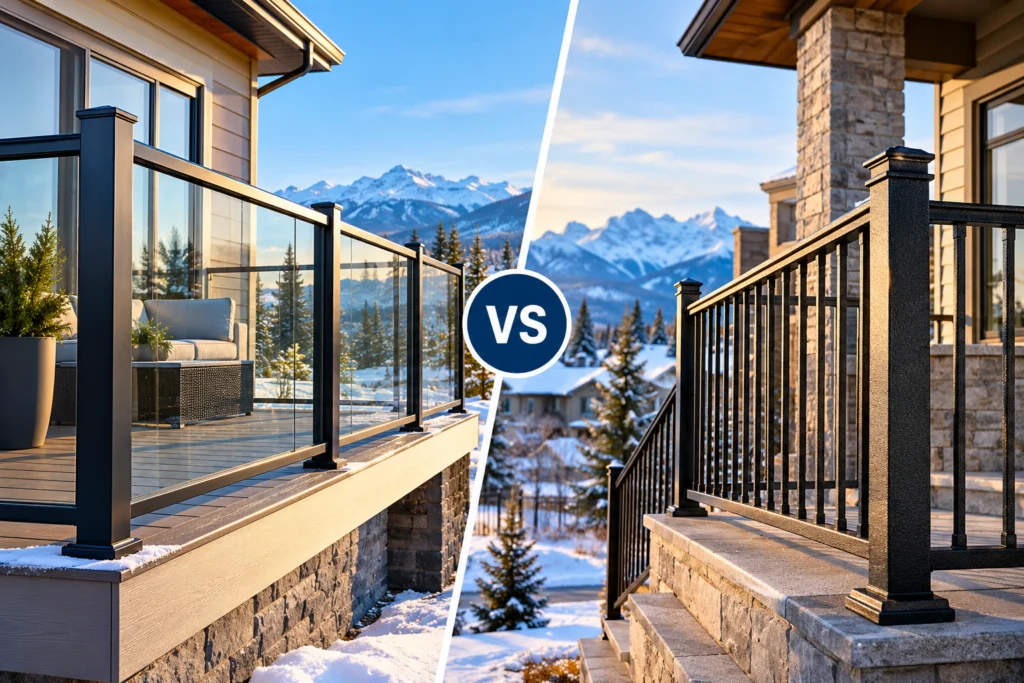
When comparing aluminum vs steel railings in Alberta, homeowners should look beyond initial installation costs and consider how each material performs through repeated winters and changing weather conditions. Alberta’s climate puts exterior railings through a tough annual cycle — deep freezes, heavy snow loads, moisture from melting ice, and sharp temperature swings that can stress even well-built structures.
Aluminum and steel are the two most popular railing materials for residential properties, and each brings distinct strengths to the table. The right choice ultimately comes down to maintenance requirements, appearance preferences, structural needs, budget, and how the railing will be used. This guide breaks down the key differences so you can make an informed decision for your deck, balcony, porch, or staircase.
Understanding Aluminum and Steel Railings
What Are Aluminum Railings?
Aluminum railings are manufactured from lightweight metal extrusions and are commonly finished with protective powder coatings for added durability and visual appeal. This lightweight construction makes aluminum a popular choice for decks, balconies, and porches, where ease of handling and installation matter. Aluminum naturally resists corrosion, and modern systems are available in a wide range of colours, profiles, and styles — from sleek contemporary lines to more traditional picket designs.
What Are Steel Railings?
Steel railings offer a strong, rigid option well-suited to applications that demand significant structural support. Standard steel differs from galvanized or otherwise coated steel in how it resists moisture and corrosion over time — a distinction that matters in Alberta’s climate. Steel is frequently used in traditional, contemporary, and decorative railing designs, including intricate ornamental ironwork that’s difficult to replicate in other materials.
Aluminum vs. Steel Railings in Alberta: Key Differences
| Comparison Factor | Aluminum Railings | Steel Railings |
| Corrosion resistance | Naturally forms a protective oxide layer; coatings add further protection | Depends on steel type and protective treatment |
| Weight | Generally lightweight | Generally heavier |
| Strength and rigidity | Suitable when properly engineered for the application | High strength and rigidity, depending on design |
| Maintenance | Typically low maintenance | May require more coating inspections and rust prevention |
| Winter performance | Performs well outdoors with appropriate materials and installation | Can perform well when protected against corrosion |
| Design options | Clean, modern, and versatile styles | Modern, traditional, and ornamental styles |
| Installation | Lighter components may simplify handling | Weight and fabrication can affect installation |
| Cost | Depends on product quality and system design | Depends on steel type, fabrication, and finish |
It’s worth noting that no material is universally stronger, cheaper, or longer-lasting across every scenario. Actual performance depends heavily on the specific railing system, finish, design, installation quality, and site exposure.
Weather and Winter Performance
Alberta’s snow, moisture, and freeze-thaw cycles put consistent pressure on exterior railings. Aluminum resists rust by nature, while steel relies on protective coatings — such as galvanizing or powder coating — to hold up against the same conditions. Regardless of material, every railing system needs proper drainage, secure fasteners, and correct installation to perform reliably through Alberta winters.
Maintenance and Long-Term Durability
Maintenance needs differ meaningfully between the two materials. Steel railings typically call for more frequent cleaning, repainting, coating inspections, and corrosion prevention, especially in areas prone to chipped or scratched finishes. Powder-coated aluminum, by comparison, tends to reduce routine maintenance demands significantly. If a steel coating becomes damaged, it’s important to repair it promptly — exposed steel can begin rusting quickly once moisture gets in.
Installation and Structural Requirements
Material weight, railing configuration, anchoring method, and site conditions all influence how a railing is installed. Lighter aluminum components can simplify handling and reduce installation complexity, while steel’s added weight may require more robust anchoring and fabrication planning. Whichever material you choose, the railing system must be designed to meet applicable building-code requirements for height, load, and spacing.
Pros and Cons of Aluminum Railings for Alberta Homes
Advantages
- Naturally corrosion-resistant and does not develop iron rust
- Lightweight and available in a variety of styles and finishes
- Generally requires less maintenance than painted carbon steel
- Works well for decks, balconies, patios, and exterior staircases
- Can be paired with glass panels for a contemporary appearance
Potential Limitations
- May dent or deform under certain impacts, depending on the alloy and profile
- Not every aluminum system is suitable for every structural application
- Premium finishes, glass panels, and custom designs can increase upfront costs
Homeowners researching aluminum deck railings in Alberta often find that outdoor aluminum railings strike a strong balance between appearance and low-maintenance railing systems, particularly for properties where seasonal upkeep is a priority.
Pros and Cons of Steel Railings for Alberta Homes
Advantages
- Offers high strength and rigidity for appropriately designed applications
- Supports intricate decorative designs and traditional architectural styles
- Can provide a substantial, solid appearance
- May suit homeowners who prioritize custom metal fabrication
Potential Limitations
- Unprotected carbon steel can rust when exposed to moisture and damaged coatings
- Painted or coated surfaces may require periodic inspection and maintenance
- Heavier components can influence transportation, handling, and installation costs
- Stainless steel and galvanized steel have different corrosion-resistance properties and price points
Steel isn’t inherently unsuitable for Alberta winters. Its real-world performance depends on the grade of steel used, the quality of its finish, its exposure to the elements, and how consistently it’s maintained.
Which Railing Material Offers Better Value Over Time?
Rather than focusing solely on the initial purchase price, it’s worth weighing total cost of ownership across several factors:
- Material and fabrication costs
- Installation labour and anchoring requirements
- Ongoing cleaning, repainting, and coating repairs
- Expected service life under your property’s actual site conditions
- Warranty coverage and availability of replacement components
For homeowners seeking lower long-term maintenance, aluminum often delivers better value over time. Properly protected steel, meanwhile, can still be worthwhile when specific design or structural requirements call for it. Because pricing varies by region, product quality, and system design, it’s best to request a local quote rather than rely on general estimates.
Which Is Better for Different Areas of Your Home?
Decks and Patios
Aluminum is a practical option for homeowners seeking a weather-resistant, low-maintenance railing that holds up well across multiple seasons without frequent touch-ups.
Balconies
Aluminum picket and glass-panel systems work well for balconies, particularly where unobstructed views and a clean, modern appearance are priorities.
Exterior Stairs
Both aluminum and steel can work for exterior stairs, depending on grip requirements, handrail design, anchoring method, and the structural demands of the staircase.
Decorative Entryways
Steel is often the better fit for intricate ornamental designs, while aluminum can suit homeowners who prefer simpler, more modern lines at the entryway.
Why Consider Aluminum Railings from Omega Aluminum Railing System?
Omega Aluminum Railing System provides railing solutions for both residential and commercial properties across Alberta. Its product range includes aluminum picket railings, glass-panel railings, and a variety of top-rail styles, giving homeowners flexibility to match their property’s existing architecture. Available powder-coated colours include black, white, and bronze, covering a range of common exterior palettes.
Omega also highlights its patented interlocking technology, designed to simplify installation and support a clean, consistent finish. Its railing systems are engineered to meet applicable safety and building-code requirements, giving homeowners added confidence in long-term performance.
Planning a deck, balcony, or stair railing upgrade? Explore Omega Aluminum Railing System’s aluminum railing products to find a style that complements your property and suits Alberta’s outdoor conditions.
Making the Right Choice for Your Alberta Home
Aluminum and steel each bring real advantages to residential railing projects. Aluminum stands out for homeowners who prioritize corrosion resistance, design flexibility, and reduced upkeep across Alberta’s changing seasons. Steel remains a solid choice for certain structural needs and decorative applications, particularly when properly protected and maintained.
Before deciding, think carefully about your local climate exposure, how the railing will be used, your budget, and how much ongoing maintenance you’re willing to take on. Ready to explore your options? Browse Omega Aluminum Railing System’s product lineup or request a consultation to find the right railing for your home.
FAQs
Aluminum is often preferred in Alberta for its corrosion resistance and low maintenance, but steel can be a suitable choice for specific structural or decorative needs when properly coated and maintained.
Aluminum does not develop iron rust the way steel can. It naturally forms a protective oxide layer, and powder coatings add further protection against Alberta’s moisture and freeze-thaw cycles.
Steel generally offers high strength and rigidity, but aluminum railings can also provide adequate strength when properly engineered for the specific application. The better option depends on the structural requirements of your project.
Powder-coated aluminum typically requires less routine maintenance than painted carbon steel, which may need periodic coating inspections and rust prevention.
Yes. Aluminum railings are a popular choice for decks and balconies in Alberta due to their lightweight construction, corrosion resistance, and compatibility with glass-panel designs.


