
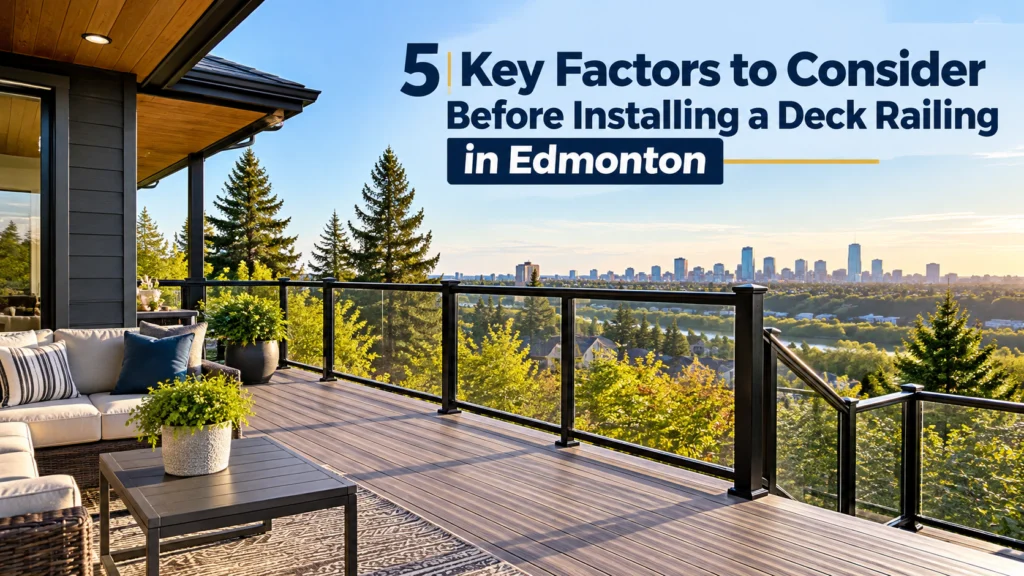
A deck railing does more than mark the edge of your outdoor space. It protects your family, defines how you use the deck, and shapes the overall look of your property. In Edmonton, that job gets harder. Snow loads, freeze-thaw cycles, moisture, and wide seasonal temperature swings put real stress on railing materials and installation methods throughout the year.
Choosing a railing system isn’t as simple as comparing prices or picking a style you like. The right decision depends on safety requirements, material performance, design goals, total cost over time, and the skill of whoever installs it. Before starting a deck railing installation in Edmonton, it’s worth understanding the factors that separate a railing that lasts for decades from one that needs costly repairs within a few years.
Here are five key factors to evaluate before you commit to a project.
1. Prioritize Safety and Building Code Requirements
Safety should guide every other decision in your deck railing project. A railing that looks great but doesn’t meet structural or code requirements puts your household at risk and can create problems when it’s time to sell your home.
Understand railing height and spacing requirements
Railing height, baluster spacing, and handrail security all affect how well a railing protects people using the deck. These requirements aren’t one-size-fits-all. They can vary depending on how high the deck sits off the ground, the type of building it’s attached to, and how the space will be used. Before any installation begins, verify the applicable Alberta building code requirements and check whether your project needs a local permit. Skipping this step is one of the most common — and most expensive — mistakes homeowners make.
Check structural strength and secure mounting
A railing is only as strong as what it’s attached to. Posts need secure anchoring, fasteners need to suit the material and mounting surface, and the attachment method needs to match the deck’s construction. Before installing a new system, have the deck’s existing framing and overall condition checked for rot, movement, or weak points. This is one of the clearest reasons to work with a professional: an experienced installer can identify structural issues and address safety and compliance requirements that aren’t always obvious to the untrained eye. A safe deck railing starts with what’s underneath it, not just what you see on the surface.
2. Choose the Right Railing Material for Alberta’s Climate
Material choice affects how your railing performs, how much upkeep it needs, and how much value it holds over the long run. In a climate like Edmonton’s, this decision carries more weight than it might elsewhere.
Why aluminum railings are worth considering
Aluminum resists rust in a way that untreated steel simply can’t match, making it well-suited to outdoor applications that face snow, moisture, and temperature swings throughout the year. It also tends to require less ongoing maintenance than materials that need regular painting or staining. Many aluminum railing systems use powder-coated finishes, which help protect the surface’s appearance and add a layer of defense against the elements.
Compare aluminum, wood, steel, and glass options
Each material comes with trade-offs:
- Aluminum: Durable, lightweight, and available in multiple finishes — a practical option for homeowners who want reliable performance without heavy upkeep.
- Wood: Offers a traditional, warm appearance but typically needs regular staining or sealing to hold up against Alberta’s weather.
- Steel: Delivers strength, but requires appropriate corrosion protection to prevent rust over time.
- Glass: Supports open, unobstructed views and a contemporary look, usually paired with a structural railing system designed to support the panels.
There’s no single “best” material for every property. The right choice depends on your home’s design, your budget, how exposed the deck is to wind and weather, and how much maintenance you’re willing to take on.
3. Consider Design, Style, and Visibility
A deck railing should work with your home’s architecture, not against it. Getting the design right means thinking about both appearance and day-to-day function.
Match the railing to your home’s architecture
Railing colour, post style, and top rail design all influence how the finished product looks against your home’s exterior. Black, white, and bronze aluminum finishes are popular choices because they pair well with a range of architectural styles. Traditional picket railings create a classic, defined look, while modern glass panels offer a sleeker, more open feel. Omega Aluminum Railing System offers both aluminum picket and glass-panel railing options, giving homeowners a range of styles to compare when planning a project.
Balance privacy, visibility, and functionality
Glass railings preserve sightlines and make a deck feel more open, which is appealing if you want to protect a view. Picket systems, on the other hand, create a more defined visual boundary and can offer a bit more privacy. Beyond looks, think about how the deck will actually be used — where furniture will sit, how stairs and access points flow, and whether visibility matters for keeping an eye on kids or pets. The best design balances how the railing looks with how well it supports everyday life on the deck.
4. Evaluate Installation Costs and Long-Term Maintenance
It’s tempting to make a decision based on the lowest quote, but the sticker price only tells part of the story. Understanding what drives cost — and what happens after installation — gives you a clearer picture of total value.
What affects deck railing installation costs?
Several factors influence the final price of a project:
- Total railing length and overall deck dimensions
- Material, finish, and design complexity
- Number of corners, stairs, and access points
- Mounting method and the condition of the existing deck framing
- Labour, removal of old railings, and any necessary repairs
Because these variables differ from project to project, be cautious of any quote offered without a proper assessment of your deck’s measurements and condition.
Look beyond the initial installation price
Low-maintenance materials can significantly reduce the time and money you spend on upkeep down the road. Durable finishes, the availability of replacement parts, and solid warranty coverage all add value that isn’t obvious from an initial quote alone. When comparing options, ask for an itemized quote that clearly explains the materials used, labour involved, installation scope, and warranty terms. A detailed breakdown helps you compare providers fairly and avoid surprises later. Avoid accepting a fixed price before the project’s measurements, specifications, and site conditions have been confirmed.
5. Hire an Experienced Railing Installer in Edmonton
Even the best materials won’t perform well if they’re installed incorrectly. The installer you choose matters just as much as the railing system itself.
Review experience, product quality, and installation methods
Look for an installer with a track record in residential deck railings and outdoor installations specifically, not just general contracting work. Ask about product specifications, mounting methods, and how they ensure compliance with relevant building code requirements. A reliable installer should be able to provide accurate measurements, offer design guidance suited to your property, and give you a clear project timeline before work begins.
Ask about warranties and after-installation support
Product warranties and workmanship warranties are two different things, so review them separately before signing off on a project. Ask about recommended cleaning procedures and ongoing maintenance requirements, especially given Edmonton’s winters. It’s also worth knowing who to contact if adjustments or repairs are needed after the installation is complete. Omega Aluminum Railing System is an Edmonton-based provider offering residential and commercial railing solutions, including aluminum and glass systems. Its approach includes prefabricated components and interlocking railing technology, designed to support a more consistent installation process.
Why Choose Aluminum Deck Railings for Your Edmonton Property?
Aluminum railings offer several practical advantages for homeowners weighing their options:
- Weather resistance: Aluminum does not rust the way untreated steel does, though finishes and fasteners still need appropriate care over time.
- Low maintenance: Generally requires less upkeep than painted or stained wood railings.
- Design flexibility: Available in a range of colours and railing styles to suit different homes.
- Long-term value: Durable materials paired with quality installation can help reduce ongoing maintenance needs.
- Versatile applications: Suitable for many residential decks, stairs, balconies, and other outdoor spaces when properly specified for the project.
If you’re comparing railing systems for an Edmonton property, explore the available aluminum railing products and services to see which options fit your deck’s requirements.
About Omega Aluminum Railing System
Omega Aluminum Railing System provides railing solutions for residential and commercial properties in Edmonton and across Alberta. Its product range includes aluminum picket railings, glass-panel systems, and a variety of finish options designed to complement different architectural styles. With a focus on durable materials, practical installation systems, and low-maintenance finishes, Omega helps property owners explore railing options suited to their specific projects. Homeowners planning a new deck or upgrading an existing outdoor space can contact the team to discuss their requirements and request a project estimate.
Final Thoughts: Make an Informed Decision Before Installing Your Deck Railing
Choosing a deck railing involves more than picking a style off a brochure. Safety and code compliance protect your household, the right material stands up to Alberta’s climate, thoughtful design keeps your deck both attractive and functional, and understanding true costs helps you avoid surprises down the road. Professional installation ties all of these factors together. The right railing balances appearance, durability, and compliance with applicable building requirements, so take the time to compare suitable systems before making a final decision. Planning a deck railing project? Contact Omega Aluminum Railing System to discuss your requirements and explore aluminum railing options for your Edmonton property.
FAQs
The best material depends on your priorities. Aluminum offers rust resistance and low maintenance, making it a strong fit for Edmonton’s climate. Wood provides a traditional look but needs regular upkeep, steel offers strength with proper corrosion protection, and glass suits homeowners who want open views paired with a structural railing system.
Cost depends on factors like total railing length, material and finish, design complexity, the number of corners and stairs, mounting method, and labour requirements. Because every deck is different, request an itemized quote based on your project’s actual measurements and site conditions rather than a general estimate.
Permit requirements can vary depending on your deck’s height, the type of building it’s attached to, and local regulations. Verify applicable Alberta building code and local permit requirements before starting your installation.
Railing height requirements depend on factors such as deck height and intended use, and they’re set out in the applicable Alberta building code. Confirm the specific requirements for your property before planning your railing design.
Aluminum railings generally require less maintenance than wood, but finishes and fasteners still benefit from periodic care. Clear heavy snow buildup when possible, check fasteners periodically, and follow any manufacturer-recommended cleaning procedures to protect the finish through freeze-thaw cycles.
